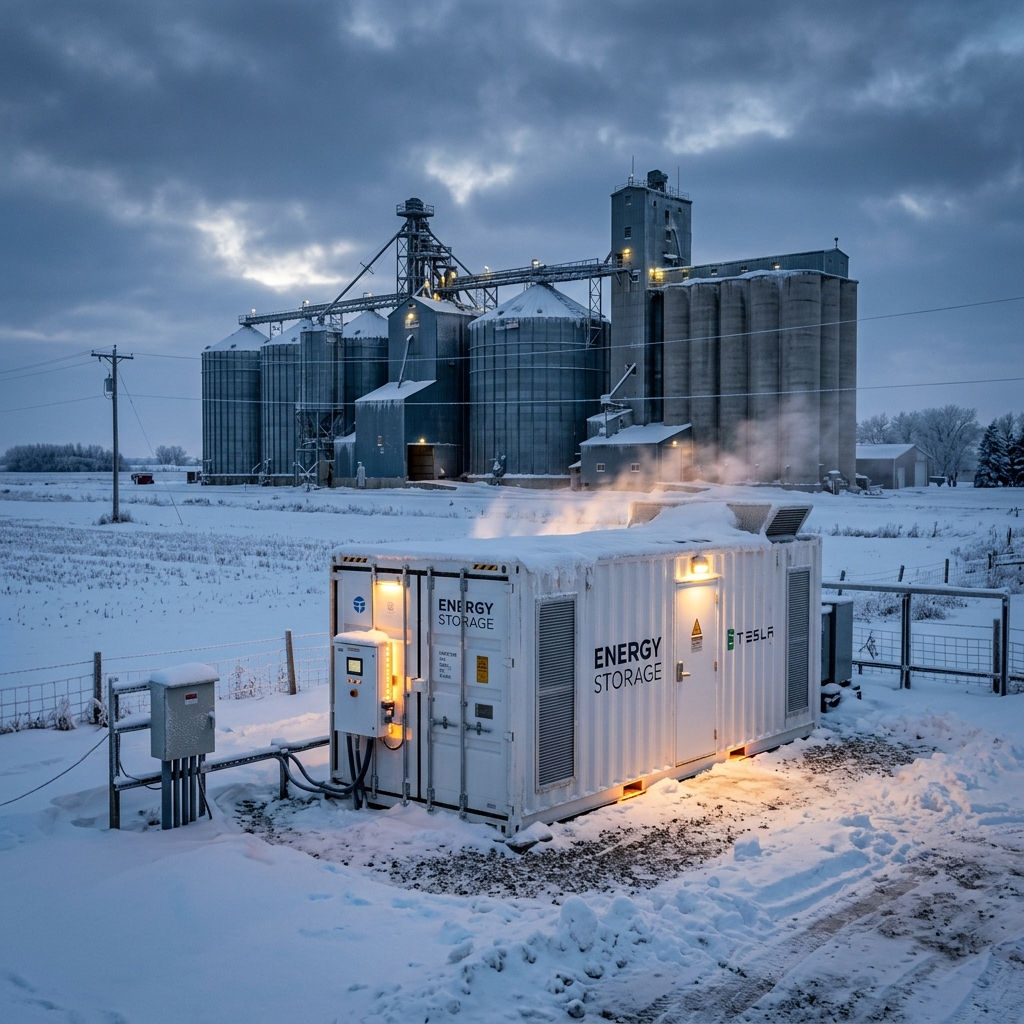
The agricultural sector is the most difficult test for any energy technology. Containers of equipment stand in the open in the middle of fields, blown by icy winds in winter and covered in a thick layer of explosive grain dust during harvest. Lithium Iron Phosphate (LiFePO4) or (LFP) batteries, which have dominated the market, perform well in the greenhouse conditions of data centers. But for Ukrainian elevators, a new king will appear on the scene in December — Na-ion (Sodium-ion) batteries.
Battle of Morozom: Achilles heel of lithium
The main disadvantage of lithium-ion batteries (of any chemistry, including LFP) is a sharp degradation of characteristics at sub-zero temperatures. The physics of lithium prohibits charging the cell at temperatures below 0°C (the effect of lithium "plating" occurs, which destroys the battery). In order for the industrial BESS on LFP to work outside in winter, the container is equipped with powerful climate control systems (HVAC).
Challenge & Problem Statement: In severe frost, the HVAC system consumes up to 15-20% of the capacity of the battery itself just to warm it up! You are literally heating the air with your own money.
Sodium batteries (Na-ion) use fundamentally different electrochemistry:
- Sodium ions are larger in size, but the electrolyte has different properties. At temperature -20°C the sodium cell retains more than 90% of its nominal capacity (the LFP in these conditions loses up to 40% or is completely disabled by the BMS board).
- Na-ion are capable take charge even in severe frost without preheating the cells.
- This means a radical simplification of the thermal management of the container. Fewer air conditioners, less self-consumption, higher total system efficiency (RTE).
Grain dust and absolute fire safety
For grain dryers and elevators, fire safety is a matter of survival. Grain dust in air concentration is extremely explosive (ATEX category). Classical NMC-lithium batteries are prone to "thermal runaway" (Thermal Runaway), when the ignition of one cell inevitably sets fire to the adjacent cells by releasing oxygen (they cannot be extinguished with water). LFPs are safer, but the risk remains.
The sodium-ion batteries have demonstrated phenomenal stability in nail puncture, overheating and short circuit tests. They practically do not burn and do not emit toxic gases in such volumes.
Moreover, Na-ion batteries can be discharged to absolute zero (0 Volts) during transport (lithium at 0V dies forever). This makes logistics and storage absolutely safe. Your batteries go to the object not as "dangerous cargo", but as a piece of metal.
Economics independent of Elon Musk and China
Lithium is the "new gold". Its reserves are limited, mining is difficult (mainly South America and Australia), and processing is monopolized. Sodium is the 6th most common element on Earth. It is literally in sea salt everywhere.
Although the energy density of Na-ion (about 140-160 Wh/kg) is still slightly inferior to lithium (180-250 Wh/kg), which makes them difficult for electric vehicles, for stationary industrial BESS in containers, weight does not matter at all. There is plenty of land in the agricultural sector. The main thing is stability, a low price per kilowatt-hour and the ability to work in mud and cold.
Verdict for APC
The agrarian business of Ukraine is currently undergoing modernization. Choosing Na-ion technology for backup dryers, irrigation pumping stations and refrigerators is the most pragmatic step. You get an "unbreakable" battery that is not afraid of the Ukrainian winter, is absolutely safe and has a colossal cycling resource. Contact the engineers of BESS Ukraine, and we will select the architecture exactly for the profile of your elevator.
Ready to stop burning money?
Complete the engineering questionnaire. We will calculate a detailed feasibility study for your company with an exact payback period free of charge.
Get Feasibility Study