Battery Storage for Warehouses and Logistics in Odesa
Odesa's port logistics runs on electricity that disappears without warning. Your cold rooms thaw, doors jam, forklifts stop. A battery storage system can keep you operational and cut your electricity bill by shifting charging to the night tariff.
Key parameters
What breaks first in Odesa warehouses
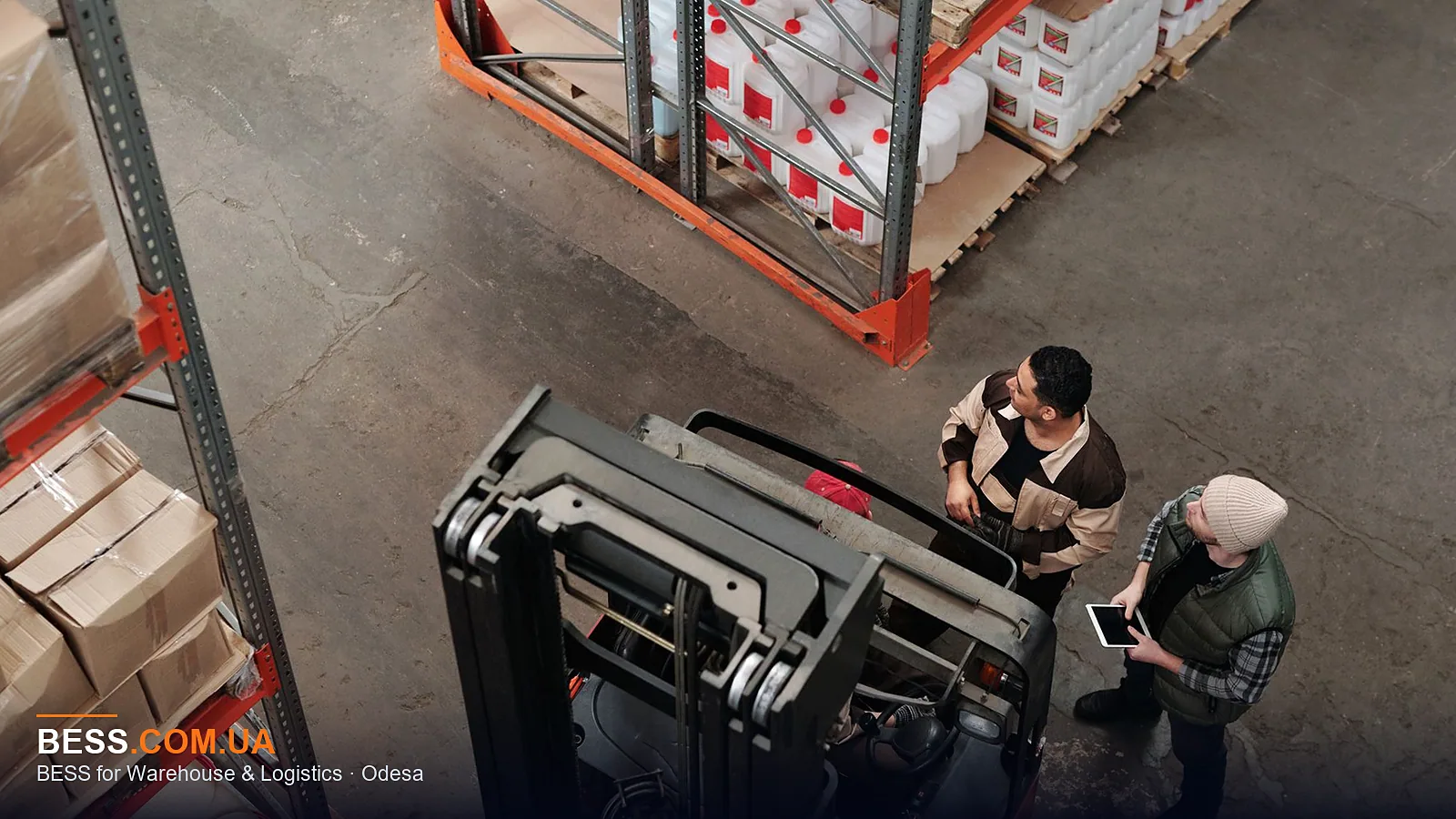
When DTEK Odesa Electric Grids sheds load, the first thing you notice is the forklift charging stations. A 30 kW charger left mid-cycle means a dead fleet by the next shift. Cold rooms start warming up within minutes, and the compressor restart surge can trip your main breaker when power returns. Doors and conveyors stop — loading bays become unusable exactly when you need them most.
Typical losses: a 2-hour blackout at 150 kW average load costs you roughly 300 kWh of lost productivity, plus spoilage if cold rooms exceed temperature thresholds. In Odesa, blackouts are not rare — they are a fact of grid life.
How storage closes the gap
Install a battery system sized to cover your critical loads — forklift chargers, cold room compressors, doors, and lighting. The battery charges from the grid at night when the tariff is lowest (typically 2-3 times cheaper than day rates) and discharges during blackouts or peak demand hours.
For a 200 kW warehouse, a 250 kWh / 250 kW system with LiFePO4 chemistry provides about 1 hour of full backup, or several hours if you manage loads. With dual-mode inverter, it can also do peak shaving to reduce demand charges.
Odesa specifics: grid and climate
Your site is connected via DTEK Odesa Electric Grids, typically at 0.4 kV for loads up to 500 kW. That is fine for our 50–500 kW cabinets. We have installed systems in Odesa and know the local transformer capacity constraints — we verify with DTEK before design.
Odesa's humidity and salt air require proper enclosures. Our cabinets are IP55 with C4 corrosion protection, built for coastal industrial environments. We also account for the heat — liquid cooling keeps cells at optimal temperature, extending life even in summer peaks.
The numbers: payback and costs
For a 200 kW / 300 kWh system, expect to pay around 3.5–4.5 million UAH installed (2025 prices). With night tariff shifting alone (charging at 2.5 UAH/kWh vs daytime 5.5 UAH/kWh), you save about 0.9 million UAH per year if you cycle 500 kWh daily. Payback: 3.5–5 years, depending on tariff differential and blackout frequency.
Add the cost of avoided spoilage and downtime — for a cold-store operator, one major blackout can cost more than the annual savings. That shortens payback to under 3 years. We provide a detailed feasibility study with your actual load profile before you commit.
What to watch out for in sizing
Do not oversize. Most warehouses need 100–500 kW, but the real requirement depends on your forklift charging schedule and cold room duty cycles. We need a 1-2 week load log from your mains meter to size correctly.
At 0.4 kV, forget about huge systems — 500 kW is the practical limit. If you need more, you'll need a transformer upgrade, which DTEK may charge for. We'll help you navigate that.
Frequently asked questions
How long can a BESS power my warehouse during a blackout?
Can the system pay for itself just by shifting forklift charging to night?
Do you handle all the paperwork with DTEK Odesa Electric Grids?
What maintenance does the battery require?
Can the system integrate with solar panels?
Figures shown are indicative. Exact sizing follows a site survey and load-profile analysis.